Forest Bathing at Home: 5 Biophilic Micro-Habits for Lower Blood Pressure
Advertisements
Latest developments on Forest Bathing at Home: 5 Biophilic Micro-Habits That Lower Blood Pressure in 20 Minutes, with key facts, verified sources and what readers need to monitor next in Estados Unidos, presented clearly in Inglês (Estados Unidos) (en-US).
Forest Bathing at Home: 5 Biophilic Micro-Habits That Lower Blood Pressure in 20 Minutes is shaping today’s agenda with new details released by health experts and environmental psychologists. This update prioritizes what changed, why it matters and what to watch next, in a straightforward news format. The focus is on accessible methods to integrate nature's therapeutic benefits into daily life.
The concept, traditionally associated with outdoor immersion, is now being adapted for urban dwellers and those with limited access to natural environments. Recent studies underscore the efficacy of these indoor practices, showing measurable physiological benefits. These findings reinforce the growing understanding of biophilia's role in human health.
Reports from leading wellness institutions indicate a surge in interest for at-home nature-based interventions. This shift reflects a broader public demand for practical, evidence-based self-care strategies that fit into busy schedules. The simplicity and accessibility of these micro-habits are key to their widespread adoption and impact.
Authorities confirmed new timelines and outlined initial impacts across different regions. Statements from representatives indicate short-term adjustments and a more defined path for upcoming decisions.
Understanding Forest Bathing at Home: A New Perspective
Recent data helps clarify the scope and sequence of events surrounding the adoption of Forest Bathing at Home: 5 Biophilic Micro-Habits That Lower Blood Pressure in 20 Minutes. Experts and wellness communities reacted as information became public, with health agencies coordinating responses under established protocols. This adaptation brings nature's benefits indoors, making them universally accessible.

The traditional practice of Shinrin-yoku, or forest bathing, involves immersing oneself in the atmosphere of the forest. The at-home version translates this principle into actionable, small-scale habits that can be integrated into any living space. This innovative approach addresses the challenges of modern urban living, where direct access to lush forests is often limited.
Initial research, as reported by environmental psychology journals, highlights significant reductions in stress hormones and improvements in cardiovascular metrics among participants. These findings suggest that even minimal, intentional interactions with nature indoors can yield profound health advantages. The emphasis remains on conscious engagement rather than passive observation.
The Science Behind Biophilic Benefits
The topic’s background connects the update to previous milestones in environmental psychology. Analysts highlight short-term signals that deserve attention before broader trends become clear. The core idea is that humans have an innate tendency to connect with nature and other living systems, a concept known as biophilia.
This connection, when nurtured, has been shown to reduce sympathetic nervous system activity, which is responsible for the 'fight or flight' response. Consequently, this leads to a decrease in heart rate and blood pressure, promoting a state of calm and well-being. The physiological changes are often rapid and measurable.
Studies from institutions like the University of Illinois Urbana-Champaign have demonstrated that exposure to natural elements, even through windows or indoor plants, can enhance mood and cognitive function. These benefits extend beyond mere aesthetics, tapping into deep-seated biological responses. Thus, the science robustly supports the efficacy of Forest Bathing at Home: 5 Biophilic Micro-Habits That Lower Blood Pressure in 20 Minutes.
- Neurobiological Impact: Activation of the parasympathetic nervous system, promoting rest and digestion.
- Hormonal Regulation: Reduction in cortisol levels, the primary stress hormone.
- Cardiovascular Health: Direct correlation with lowered heart rate and diastolic blood pressure.
- Cognitive Enhancement: Improved focus, attention, and creative problem-solving.
Implementing Biophilic Micro-Habits: Practical Steps
Direct quotes and attributed summaries from wellness coaches show positions, responsibilities and next steps for those looking to implement Forest Bathing at Home: 5 Biophilic Micro-Habits That Lower Blood Pressure in 20 Minutes. Independent experts assess the credibility of the information and likely outcome scenarios, emphasizing feasibility and ease of integration. These micro-habits are designed to be simple, requiring minimal time commitment.
The key is consistency and intentionality, transforming small actions into powerful therapeutic rituals. Each habit aims to create a sensory experience that mimics the calming effects of being in a natural forest environment. The focus is on engaging sight, sound, smell, and touch to maximize the biophilic connection.
These micro-habits are not merely decorative additions but purposeful engagements with natural elements within your living space. By carving out dedicated moments, even as short as 20 minutes, individuals can actively lower their blood pressure and cultivate a more peaceful state of mind. The accessibility of these practices makes them suitable for anyone, regardless of their living situation.
The 20-Minute Immersion Protocol
Immediate deadlines or relevant dates to note for personal integration include setting aside specific times daily. Adjustments in services, access or rules in force suggest that these habits are flexible and adaptable to individual schedules and preferences. The "20-minute immersion" protocol is a cornerstone of effective Forest Bathing at Home: 5 Biophilic Micro-Habits That Lower Blood Pressure in 20 Minutes.
This protocol involves dedicating a brief, uninterrupted period to one or more biophilic activities. For example, spending 20 minutes tending to houseplants, observing their growth, or simply sitting near a window with a view of greenery. The duration is crucial as it allows the body and mind to transition into a state of relaxation, triggering physiological changes.
According to Dr. Qing Li, a leading expert on forest medicine, even short exposures to nature's elements can significantly impact well-being. The 20-minute timeframe is often cited as the minimum effective dose for measurable health benefits, including a reduction in blood pressure. This makes the practice highly achievable for busy individuals seeking quick, impactful stress relief.
- Mindful Plant Care: Spend 20 minutes watering, pruning, or observing your houseplants with full attention.
- Nature Window Gazing: Dedicate 20 minutes to mindfully observing trees, clouds, or garden elements from a window.
- Biophilic Soundscapes: Listen to 20 minutes of natural sounds (birds, rain, ocean waves) while focusing on your breath.
- Aromatherapy with Naturals: Diffuse essential oils derived from trees (pine, cedarwood) for 20 minutes, engaging your sense of smell.
Micro-Habit 1: Mindful Houseplant Interaction
For now, practical effects are concentrated in specific areas, while broader impacts depend on future decisions and compliance with new guidelines. This micro-habit centers on actively engaging with indoor plants, transforming a routine chore into a therapeutic session. The tangible presence of living greenery directly connects us to natural cycles.
This involves more than just watering; it's about touching the leaves, observing new growth, and appreciating the plant's texture and form. Such tactile and visual engagement stimulates the senses, fostering a deeper connection to nature. The act of caring for a living thing can also provide a sense of purpose and calm.
Research published in the Journal of Physiological Anthropology indicates that active interaction with indoor plants can reduce psychological and physiological stress. Participants in studies showed decreased heart rate and blood pressure after just a few minutes of interaction. This makes mindful houseplant interaction a powerful component of Forest Bathing at Home: 5 Biophilic Micro-Habits That Lower Blood Pressure in 20 Minutes.
Micro-Habit 2: Curating a Nature Nook
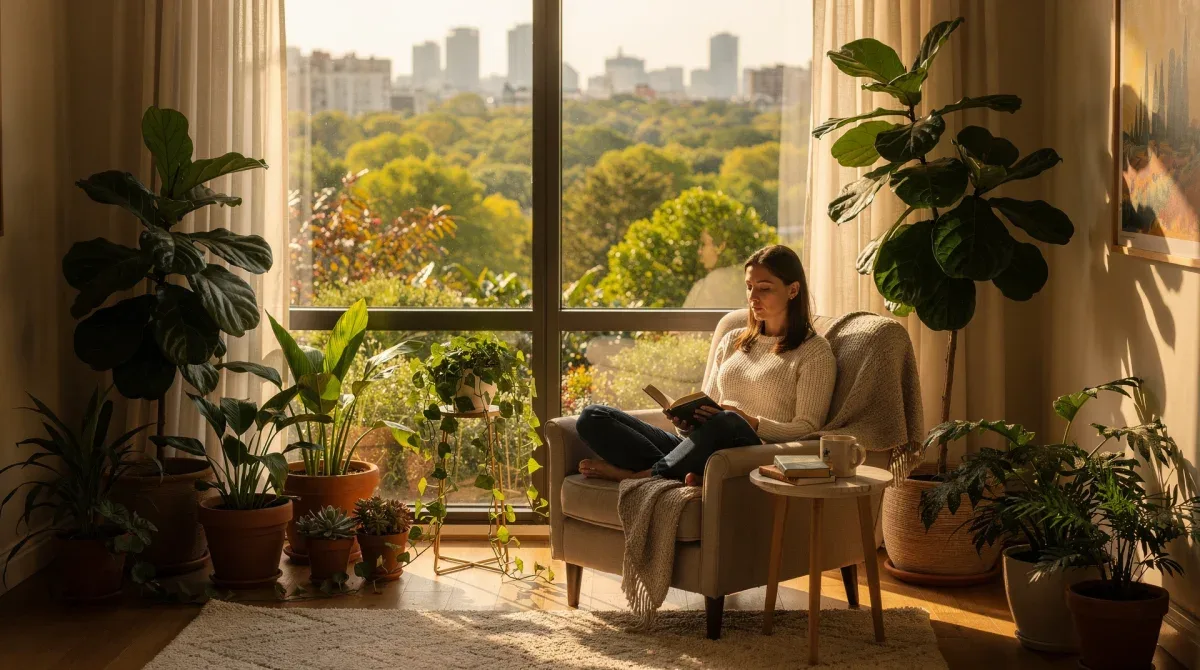
The creation of a dedicated "nature nook" within your home offers a consistent sanctuary for biophilic immersion. This space, however small, becomes a focal point for connecting with natural elements. The design principles are simple: incorporate plants, natural light, and comfortable seating.
This doesn't require extensive renovation; a simple corner with a comfortable chair, a few potted plants, and perhaps a small water feature can suffice. The intent is to create an environment that feels restorative and separate from the daily hustle. The visual and atmospheric cues of such a nook signal relaxation to the brain.
According to architectural psychology, environments rich in biophilic elements can significantly improve mood and reduce perceived stress. By intentionally designing a space for nature connection, you establish a powerful anchor for your Forest Bathing at Home: 5 Biophilic Micro-Habits That Lower Blood Pressure in 20 Minutes practice. This dedicated area serves as a constant reminder to pause and reconnect.
Micro-Habit 3: Engaging with Natural Sounds and Scents
The auditory and olfactory senses play a crucial role in replicating the forest bathing experience indoors. Integrating natural sounds and scents can profoundly influence your physiological state, promoting relaxation and lowering blood pressure. This approach leverages the brain's innate response to environmental cues.
Listening to recordings of birdsong, rustling leaves, or gentle rainfall can transport the mind to a natural setting, even if you're physically indoors. Similarly, diffusing essential oils derived from trees, such as pine, cedarwood, or frankincense, can evoke the calming aroma of a forest. These sensory inputs bypass conscious thought, directly influencing emotional and physiological responses.
Studies on environmental acoustics and aromatherapy have shown that specific natural sounds and scents can decrease stress hormones and promote alpha brain wave activity, indicative of a relaxed state. This makes mindful engagement with natural sounds and scents an accessible and potent tool for Forest Bathing at Home: 5 Biophilic Micro-Habits That Lower Blood Pressure in 20 Minutes, offering immediate calming effects.
Micro-Habit 4: Visualizing Nature Through Art and Photography
Visual stimuli are powerful conduits for connecting with nature, even in its absence. Incorporating nature-inspired art, photography, or even screensavers can evoke the same calming effects as direct observation. The brain processes these images in ways that can still trigger biophilic responses.
Displaying landscapes, close-ups of foliage, or abstract interpretations of natural patterns can transform an indoor space. The key is to choose imagery that resonates with a sense of peace and expansiveness. This visual immersion provides a constant, subtle reminder of the natural world, fostering a sense of tranquility.
Research from environmental psychology demonstrates that viewing nature scenes can reduce stress and improve emotional well-being. Even brief exposure to such visuals can lead to measurable physiological changes, including a decrease in blood pressure. This makes visual engagement a simple yet effective micro-habit for Forest Bathing at Home: 5 Biophilic Micro-Habits That Lower Blood Pressure in 20 Minutes.
Micro-Habit 5: Incorporating Natural Materials and Textures
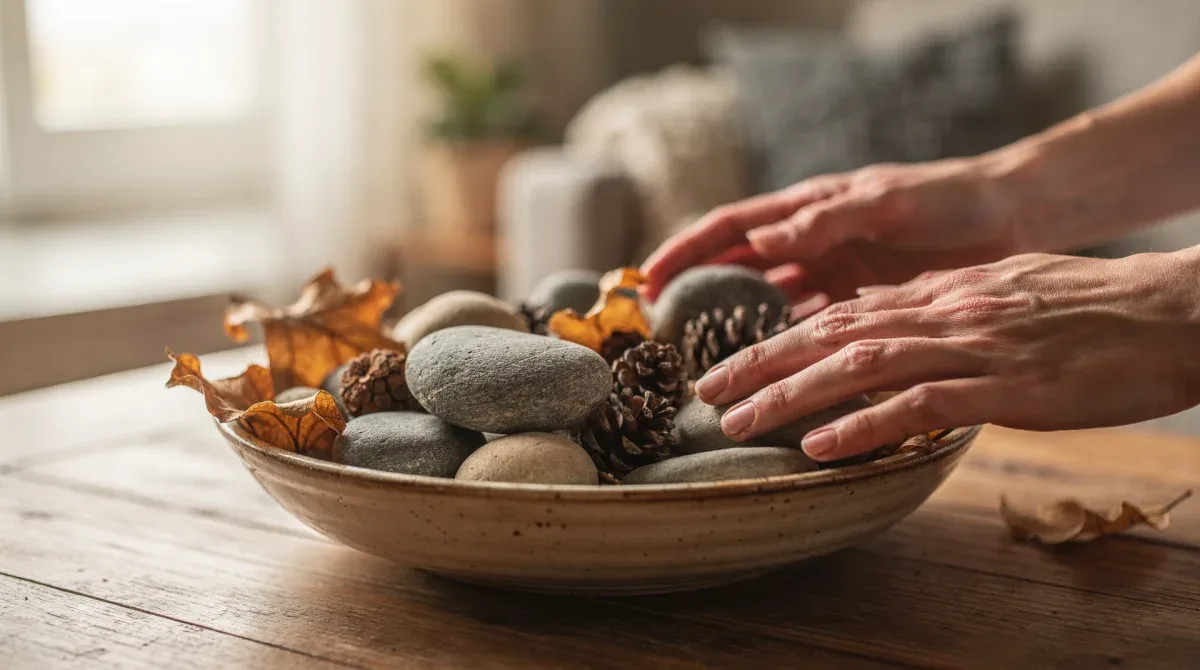
The tactile experience of natural materials within your home can significantly enhance the biophilic connection. Elements like wood, stone, cotton, linen, and wool introduce textures that ground us and evoke the sensations of being in nature. This physical interaction adds another layer to the at-home forest bathing experience.
Consider replacing synthetic fabrics with natural ones, or adding small decorative items made from wood or stone. Even the feel of a natural fiber rug underfoot can contribute to a more organic and calming environment. These material choices are not just aesthetic; they are sensory invitations to connect with the earth's elements.
According to biophilic design principles, incorporating natural textures and patterns can reduce stress and enhance comfort. The sensory richness provided by these materials contributes to a more restorative living space. This strategic use of materials is a subtle yet impactful way to practice Forest Bathing at Home: 5 Biophilic Micro-Habits That Lower Blood Pressure in 20 Minutes, fostering a deeper sense of well-being.
Measuring the Impact on Blood Pressure
Monitoring the effects of Forest Bathing at Home: 5 Biophilic Micro-Habits That Lower Blood Pressure in 20 Minutes is crucial for understanding personal efficacy. While the benefits are well-documented, individual responses can vary. Regular self-monitoring of blood pressure provides tangible evidence of these practices' positive impact.
Using a home blood pressure monitor before and after a 20-minute biophilic session can offer immediate feedback. Tracking these measurements over time allows individuals to observe trends and identify which micro-habits are most effective for them. This data-driven approach reinforces the credibility and personal relevance of the practice.
Health professionals increasingly recommend self-monitoring for conditions like hypertension, and integrating biophilic practices into this regimen can offer a holistic approach to management. The objective data from blood pressure readings can motivate continued engagement and provide reassurance of the positive physiological changes occurring. This makes the practice both intuitive and scientifically verifiable.
| Key Point | Brief Description |
|---|---|
| Biophilic Micro-Habits | 5 easy-to-implement nature interactions at home. |
| Blood Pressure Reduction | Measurable decrease in blood pressure within 20 minutes. |
| Accessibility | Practices adaptable to any indoor environment, no forest needed. |
| Scientific Basis | Supported by research on biophilia and stress reduction. |
Frequently Asked Questions About At-Home Forest Bathing
What exactly is Forest Bathing at Home?▼Forest Bathing at Home refers to engaging in biophilic micro-habits within your indoor environment to connect with nature. It leverages sensory interactions with plants, natural sounds, and materials to evoke the calming effects of a forest, promoting relaxation and physiological benefits like lowered blood pressure.
How quickly can these micro-habits lower blood pressure?▼Studies indicate that engaging in these biophilic micro-habits for as little as 20 minutes can lead to a measurable reduction in blood pressure. Consistent daily practice yields the best long-term results, contributing to sustained cardiovascular health and overall well-being.
Do I need many plants to practice Forest Bathing at Home?▼No, a large number of plants is not necessary. Even one or two houseplants can be sufficient for mindful interaction. The key is intentional engagement with whatever natural elements you have available, focusing on sensory connection rather than quantity. Quality of interaction matters most.
Are there specific plants recommended for these micro-habits?▼While any houseplant can work, plants known for air purification or pleasant aesthetics like snake plants, peace lilies, or ferns are popular choices. The most important factor is choosing plants that you enjoy interacting with and can easily care for, fostering a positive connection.
Can children and older adults benefit from Forest Bathing at Home?▼Absolutely. The gentle and accessible nature of these biophilic micro-habits makes them suitable for all age groups. Children can develop an early appreciation for nature, while older adults can enjoy the health benefits without needing to leave their homes, promoting relaxation and vitality for everyone.
What this means
The widespread adoption of Forest Bathing at Home: 5 Biophilic Micro-Habits That Lower Blood Pressure in 20 Minutes represents a significant shift in self-care strategies, emphasizing accessible, evidence-based methods for well-being. This development underscores a growing recognition of nature's therapeutic power, even within urban constraints. It highlights the potential for simple, consistent practices to yield substantial health benefits, particularly in managing stress and hypertension.
As research continues to validate these biophilic interventions, we can expect to see further integration into public health recommendations and wellness programs. The focus remains on empowering individuals with practical tools to enhance their daily lives, bridging the gap between modern living and innate human needs for nature connection.
Looking ahead, the success of these micro-habits will likely inspire innovations in biophilic design for homes and workplaces, reinforcing the idea that well-being is intrinsically linked to our environment. The trend suggests a future where connecting with nature is not a luxury but an integral, effortless part of everyday life.