Epsom Salt Baths: Alleviating Muscle Tension Weekly
Advertisements
Discover whether Epsom salt baths for muscle tension actually work, what research says about magnesium sulfate absorption, how to prepare a comfortable bath, and which safety precautions to consider before adding this practice to your self-care routine.
Epsom salt baths for muscle tension are a popular home wellness practice among people looking for ways to unwind after exercise, physical work, or stressful days. The combination of warm water and a quiet environment can feel soothing, but claims about magnesium absorption deserve closer examination.
Some wellness guides recommend three baths per week using approximately 500 grams of Epsom salt. However, this specific routine has not been established by strong clinical evidence as an effective treatment for muscle tension or magnesium deficiency.
Understanding the difference between the relaxing experience of a warm bath and the unproven therapeutic effects of dissolved magnesium sulfate can help you make safer decisions about your self-care routine.
Understanding Epsom Salt and Muscle Tension Relief
Epsom salt is the common name for magnesium sulfate, a mineral compound that dissolves in water. Despite its name, it is chemically different from ordinary table salt, which consists primarily of sodium chloride.
When Epsom salt dissolves in bathwater, magnesium and sulfate ions become present in the solution. This chemical process is well understood, but it does not establish that meaningful quantities of magnesium pass through intact human skin.
Many people report feeling more comfortable after an Epsom salt bath. However, the warmth, rest, and relaxation associated with bathing may explain much of that experience, regardless of whether magnesium sulfate is added.
For anyone considering Epsom salt baths for muscle tension, it is important to recognize that persistent pain, severe cramps, or unexplained muscle weakness may require medical evaluation rather than home treatment alone.
The Role of Magnesium Sulfate in Muscle Function
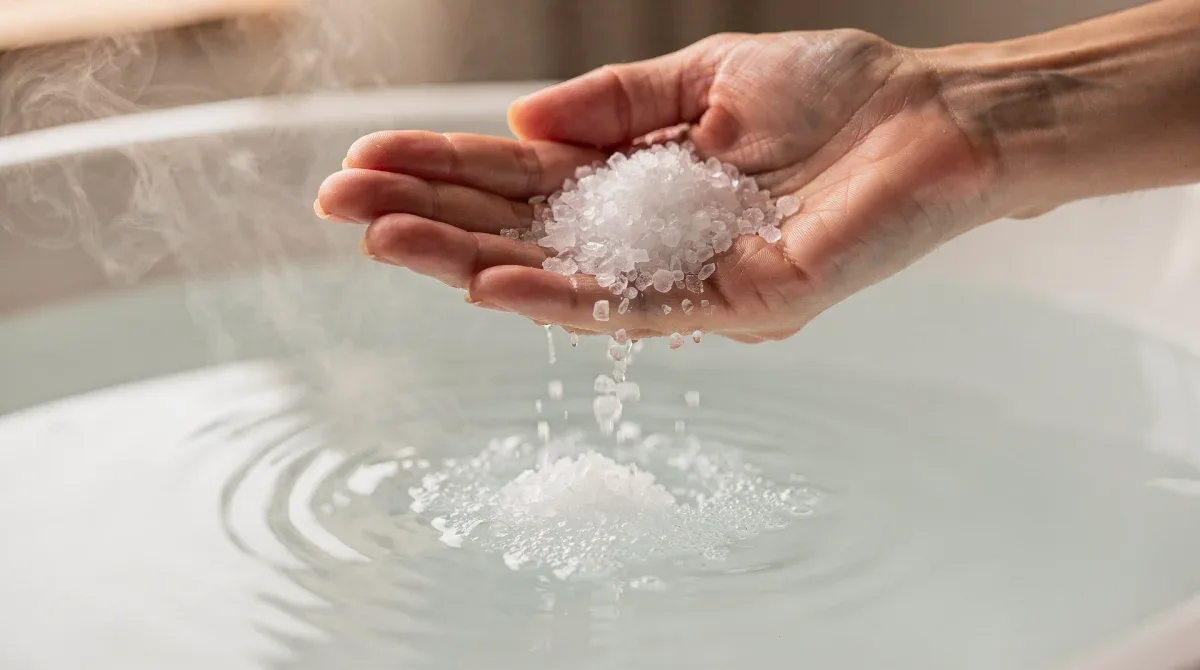
Magnesium is an essential mineral that participates in hundreds of biochemical reactions throughout the body. It contributes to normal muscle contraction, nerve signaling, energy production, and other important physiological functions.
Low magnesium levels can sometimes contribute to muscle cramps and other symptoms. However, these symptoms are not specific to magnesium deficiency and can have many possible causes.
The important distinction is that magnesium's established biological role does not prove that soaking in magnesium sulfate raises magnesium levels or relieves muscle tension through the skin.
The National Institutes of Health explains the mineral's functions and dietary sources in its official magnesium fact sheet. Foods such as legumes, nuts, seeds, whole grains, and leafy greens can help people meet their nutritional requirements.
When magnesium deficiency is suspected, a healthcare professional can evaluate the underlying cause and determine whether dietary changes or medically appropriate supplementation are necessary.
Optimal Frequency and Dosage for Alleviating Tension
There is currently no scientifically established schedule showing that three weekly Epsom salt baths provide better muscle tension relief than one or two baths, or than ordinary warm-water bathing.
Similarly, adding exactly 500 grams of magnesium sulfate has not been proven to produce an optimal therapeutic concentration for muscle recovery.
The amount used in commercially recommended bath preparations may vary according to the product and the volume of water. Product instructions should be treated as usage guidance rather than proof of clinical effectiveness.
People who enjoy Epsom salt baths for muscle tension can approach them as an optional comfort activity rather than a required treatment with a precise medical dosage.
Preparing Your Epsom Salt Bath for Maximum Benefit
A comfortable bathing experience begins with an appropriate water temperature, a clean bathtub, and enough time to relax without becoming overheated.
Very hot water may increase the likelihood of dizziness, discomfort, and skin irritation. Warm water that feels pleasant is generally a more sensible choice than attempting to maximize heat.
If you decide to add Epsom salt, select a product intended for bathing and follow the instructions printed on its packaging.
Choose Comfortable Water: Use pleasantly warm water rather than excessively hot temperatures.
Follow Product Directions: Do not assume that 500 grams is necessary or medically superior.
Keep the Session Moderate: A brief soak of approximately 10 to 20 minutes may be comfortable for some adults, depending on individual tolerance.
Exit Carefully: Stand up slowly if you feel lightheaded and use non-slip precautions.
Creating a relaxing environment can make the experience more enjoyable. Soft lighting, comfortable surroundings, or quiet music may contribute to a sense of calm.
However, avoid assuming that longer baths or larger quantities of Epsom salt will produce stronger health benefits. More exposure does not necessarily mean better results.
Scientific Evidence Supporting Epsom Salt Baths
Scientific discussions about Epsom salt baths often focus on whether magnesium can pass through the skin in quantities sufficient to influence the body's magnesium status.
The skin serves as a protective barrier that limits the entry of many external substances. Although certain medications can be delivered through specially designed skin treatments, this does not mean dissolved minerals are absorbed efficiently during ordinary bathing.
A 2017 scientific review published in the journal Nutrients examined claims about transdermal magnesium supplementation and found that the available evidence did not justify recommending it as an established method of magnesium delivery.
As a result, the specific benefits attributed to Epsom salt baths for muscle tension should be described cautiously rather than presented as clinically proven outcomes.
Magnesium Absorption: Skin vs. Oral Supplements
Magnesium absorption through the digestive system has been studied extensively. By contrast, research supporting meaningful magnesium delivery through ordinary Epsom salt baths remains limited and inconclusive.
Some small or methodologically limited studies have explored magnesium-containing creams, sprays, and mineral baths. Their findings have not established a reliable therapeutic effect from routine bathing.
It is therefore misleading to claim that Epsom salt baths provide a superior alternative to oral magnesium supplementation or that they can correct a diagnosed deficiency.
Oral magnesium supplements are not appropriate for everyone either. Their use may involve side effects, medication interactions, or additional precautions for people with impaired kidney function.
For muscle tension that continues or becomes more intense, medical assessment is more appropriate than relying on unverified claims about skin absorption.
Integrating Baths into a Weekly Self-Care Routine
Taking time to relax can be a useful part of a balanced wellness routine, especially for people whose schedules involve long periods of sitting, repetitive movements, or physical activity.
A warm bath may provide a comfortable opportunity to rest and disconnect from daily demands. Adding Epsom salt is optional, and there is no established need to follow a three-times-per-week schedule.
If bathing helps you unwind, choose a frequency that suits your preferences, health circumstances, and skin tolerance.
Combining relaxation with other habits, such as appropriate movement, sleep routines, and journaling for mental clarity, may help establish a more balanced approach to personal well-being.
Tips for Enhancing Your Bath Experience
A relaxing bath does not require complicated products or elaborate preparation. Small environmental adjustments can make the experience feel more comfortable and enjoyable.
For example, quiet music, comfortable lighting, and a few minutes away from electronic notifications may provide an opportunity to disconnect from daily distractions.
Some people also enjoy pairing their routine with relaxation and meditation practices, although results vary between individuals.
Reduce Distractions: Create a quiet environment that encourages relaxation.
Use Comfortable Lighting: Avoid overly bright lights if softer surroundings feel more pleasant.
Consider Fragrances Carefully: Scented products and essential oils can irritate sensitive skin and should not be added directly without appropriate safety guidance.
Listen to Your Body: End the bath if you experience discomfort, dizziness, or skin irritation.
If you are interested in fragrances, learn about the precautions associated with aromatherapy and self-care blends before adding scented products to bathwater.
Essential oils are highly concentrated and do not simply dissolve in water. Improper use may expose the skin to irritating concentrations.
Addressing Common Concerns and Best Practices
Most healthy adults may find an occasional comfortable bath enjoyable, but certain circumstances require additional caution.
People with serious heart conditions, significant circulation problems, impaired sensation, or a history of dizziness may need personalized advice about water temperature and bathing duration.
Those with kidney disease or other conditions affecting magnesium regulation should consult a healthcare professional before using magnesium-containing products regularly.
Bathing is also not a substitute for treating unexplained pain, fever, persistent swelling, or an injury that requires medical attention.
Potential Side Effects and When to Consult a Doctor
Some people may experience skin dryness, irritation, or discomfort when using bath additives. Sensitivity can depend on the individual, the product formulation, and bathing conditions.
Warm water itself may cause lightheadedness, particularly when a person stands suddenly after remaining in the bathtub.
If irritation occurs, discontinue the product and rinse the affected skin with clean water. Persistent symptoms should be discussed with a healthcare professional.
Seek prompt medical attention for severe or unexplained muscle pain, pronounced weakness, significant swelling, dark urine following intense exertion, or symptoms accompanied by fever.
These warning signs should not be managed solely with Epsom salt baths for muscle tension, regardless of how soothing the bath may feel.
Long-Term Benefits Beyond Muscle Tension Relief
Regular relaxation practices can provide opportunities to reduce daily stress and establish healthier routines. However, the specific long-term benefits of adding magnesium sulfate to bathwater have not been reliably demonstrated.
Claims that Epsom salt baths remove toxins, substantially increase magnesium levels, repair muscle tissue, or consistently improve athletic recovery should not be presented as established scientific facts.
People who feel more relaxed after a bath may still value the experience, even without evidence that the dissolved minerals produce a distinct therapeutic effect.
For better rest, a broader approach involving consistent sleep schedules, comfortable sleeping conditions, and appropriate physical activity is more meaningful than relying on a particular bath additive.
Epsom Salt Baths for Enhanced Well-being
A bath can become a personal ritual that offers a break from work, screens, or household responsibilities.
For some individuals, this quiet time may support a sense of relaxation before bedtime. However, experiences vary, and Epsom salt itself has not been proven to produce better sleep through skin absorption.
Those interested in improving their evenings can explore practical sleep routines alongside other habits that support consistent rest.
Likewise, people seeking ways to manage everyday worries may benefit from exploring evidence-informed mindfulness practices for anxiety as part of a broader self-care approach.
Ultimately, a relaxing bath can be enjoyable without needing to promise medical results that research has not established.
Expert Recommendations and Future Outlook
Healthcare recommendations should distinguish between magnesium's essential role in human physiology and claims about treating muscle tension through Epsom salt baths.
Magnesium obtained from food is necessary for normal muscle and nerve function. When supplementation is appropriate, healthcare professionals can recommend suitable approaches based on individual needs.
For Epsom salt baths, more rigorous research would be needed to establish whether the mineral additive provides measurable advantages over ordinary warm water.
Useful studies would compare similar bathing conditions, evaluate relevant symptoms, and use reliable methods to measure any meaningful changes in magnesium status.
Until stronger evidence becomes available, Epsom salt baths for muscle tension are best viewed as an optional relaxation practice rather than a scientifically established treatment.
Comparative Analysis: Epsom Salt vs. Other Muscle Relaxants

Different approaches to muscle discomfort serve different purposes. A warm bath may provide temporary comfort, while rehabilitation exercises, physical therapy, and medications may be recommended for specific conditions.
Epsom salt is not equivalent to a prescription muscle relaxant, nor should it be presented as a proven alternative to medical treatment.
Some muscle discomfort improves with appropriate rest and gentle movement. Other symptoms require evaluation to identify an injury, medication effect, underlying condition, or nutritional issue.
The most suitable approach depends on the cause, duration, severity, and accompanying symptoms rather than a single wellness method.
Benefits of a Natural Approach to Muscle Tension
Simple relaxation activities can be appealing because they are accessible and do not necessarily require specialized equipment.
A comfortably warm bath may help someone unwind after a tiring day. Nevertheless, describing a practice as natural does not automatically make it safer or more effective than other options.
Even products derived from naturally occurring minerals can cause irritation or be unsuitable for particular individuals.
For people who enjoy bathing, the practical benefits may include quiet time, comfort, and a temporary break from daily activities rather than proven therapeutic magnesium absorption.
Budget-conscious readers can also explore other affordable self-care ideas that do not depend on purchasing specific bath additives.
Key Point | Brief Description |
|---|---|
Evidence of Effectiveness | No strong clinical evidence establishes that Epsom salt baths relieve muscle tension better than ordinary warm-water baths. |
Frequency and Quantity | Three weekly baths with 500g magnesium sulfate is not a scientifically validated treatment protocol. |
Magnesium Absorption | Meaningful magnesium delivery through intact skin during bathing remains unproven. |
Relaxation and Comfort | A comfortably warm bath may offer an enjoyable opportunity to rest, independent of the addition of Epsom salt. |
Frequently Asked Questions About Epsom Salt Baths
How often should I take an Epsom salt bath for muscle tension?▼
There is no established medical recommendation requiring three Epsom salt baths per week to relieve muscle tension. If you enjoy bathing, choose a frequency that suits your comfort, skin tolerance, and medical circumstances. The relaxing experience may come primarily from warm water and rest. Persistent muscle pain or unusual symptoms should be evaluated rather than managed through baths alone.
What is the ideal amount of Epsom salt to use per bath?▼
There is no scientifically proven amount of Epsom salt that guarantees muscle tension relief. Although some wellness routines mention 500 grams, that quantity is not an established therapeutic dose. If you choose to use a bath product, follow its label instructions and avoid assuming that larger quantities produce better results. Consult a healthcare professional if you have relevant medical conditions.
How long should each Epsom salt bath last?▼
A moderate soak of approximately 10 to 20 minutes may feel comfortable for some adults, but this duration has not been proven necessary for magnesium absorption. Use comfortably warm water rather than excessive heat, and leave the bath if you experience dizziness or discomfort. Individual tolerance and health conditions should guide bathing duration.
Are there any side effects of regular Epsom salt baths?▼
Possible concerns include skin irritation, dryness, dizziness, and discomfort associated with overly hot water. Individuals with kidney disease, serious cardiovascular conditions, or certain skin problems should seek medical advice before adopting a regular routine. Epsom salt should not be swallowed unless a healthcare professional specifically directs the use of an appropriately labeled medicinal product.
Can Epsom salt baths help with other conditions besides muscle tension?▼
People sometimes report feeling more relaxed after warm baths, but evidence does not establish that adding Epsom salt treats anxiety, corrects magnesium deficiency, improves athletic recovery, or removes toxins from the body. The bathing experience may provide temporary comfort and quiet time. Medical conditions and persistent symptoms require appropriate evaluation and treatment.
What this means
Epsom salt baths for muscle tension remain a popular self-care activity, but their reputation should not be confused with scientifically demonstrated medical effectiveness.
Magnesium is essential for human health, yet strong evidence that meaningful amounts enter the body through ordinary bathwater is lacking. Similarly, no validated research establishes three weekly baths containing 500 grams of magnesium sulfate as the ideal protocol.
For people who enjoy the experience, a comfortably warm bath may still be a pleasant opportunity to relax. Following product instructions, avoiding excessive heat, and recognizing symptoms that require medical attention are sensible precautions.
Ultimately, effective muscle care depends on understanding the underlying cause of discomfort and choosing appropriate strategies rather than relying on unsupported promises about a particular bath ingredient.