Understanding Emotional Triggers: 2026 Self-Management Guide for Americans
Advertisements

Emotional triggers self-management helps people recognize situations that provoke strong emotional reactions and respond with greater awareness. Understanding these patterns can improve daily decision-making and emotional balance.
Triggers may come from words, memories, social interactions, or stressful situations. Identifying them is an important step toward reducing automatic reactions and building healthier responses.
Modern approaches combine self-awareness, mindfulness, lifestyle habits, therapy, and technology. Together, these strategies can support stronger emotional regulation and long-term resilience.
Defining Emotional Triggers in 2026
Emotional triggers are specific situations or cues that produce strong emotional responses. The reaction may sometimes feel more intense than the immediate situation would suggest.
These triggers can involve memories, words, places, people, or sensory experiences. Each person develops a unique pattern based on experiences and learned associations.
Recognizing these patterns is central to emotional triggers self-management. Awareness creates an opportunity to respond more deliberately instead of reacting automatically.
The Neuroscience Behind Emotional Responses
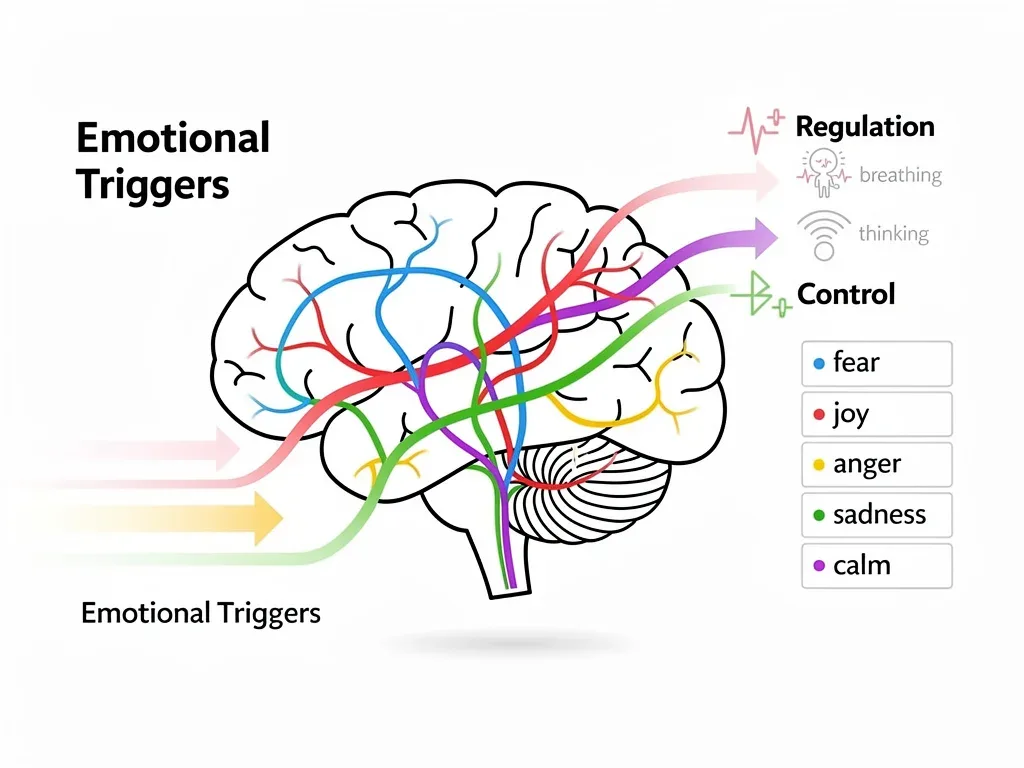
Emotional reactions involve several areas of the brain, including the limbic system and the amygdala. These regions help process threats and activate rapid stress responses.
Past experiences can influence how quickly the brain reacts to certain situations. Learned associations may make some triggers feel especially intense or immediate.
Understanding this process supports emotional triggers self-management. Initial reactions may occur automatically, but later responses can often be shaped more consciously.
The Amygdala's Role in Trigger Recognition
The amygdala can react before the brain has fully processed a situation rationally. This helps explain why some emotional responses feel immediate and difficult to control.
Developing awareness of this process can help create a pause between trigger and reaction. That pause gives the prefrontal cortex more time to influence behavior.
Mindfulness and deliberate reflection can support this process over time. These practices are commonly used in emotional triggers self-management.
Rapid threat assessment and response initiation.
Formation of emotional memories and associations.
Influence on physiological stress responses.
Identifying Your Personal Emotional Triggers
Self-awareness is essential when identifying personal emotional triggers. Without careful observation, recurring reactions can remain difficult to understand.
Journaling and reflection can reveal connections between situations, thoughts, feelings, and physical sensations. These patterns often become clearer when tracked consistently.
This process creates a foundation for emotional triggers self-management. Knowing what activates a strong response makes it easier to prepare healthier coping strategies.
Journaling for Self-Discovery
Journaling creates a private space to examine emotional experiences without immediate judgment. Writing events down can make recurring patterns easier to recognize.
Recording thoughts, reactions, and physical sensations provides useful information for self-reflection. Over time, repeated triggers may become more visible.
This practice supports emotional triggers self-management by turning vague feelings into observations that can be analyzed and addressed more deliberately.
Documenting specific events and reactions.
Identifying recurring patterns and themes.
Reflecting on thoughts and physical sensations.
Strategies for Effective Emotional Triggers Self-Management
Once triggers are identified, the next step is developing practical responses. The goal is to replace automatic reactions with more deliberate choices.
Strategies may include emotional regulation, grounding, breathing exercises, and cognitive techniques. Different situations may require different tools.
Effective emotional triggers self-management does not mean suppressing emotions. It focuses on understanding them and choosing healthier ways to respond.
Mindfulness and Grounding Techniques
Mindfulness practices encourage attention to the present moment without immediately judging thoughts or feelings. This can reduce impulsive reactions.
Grounding techniques use breathing, sensory awareness, or physical focus to bring attention back to the present. These methods can be useful during intense emotional moments.
Regular practice can strengthen emotional triggers self-management. Familiar techniques are often easier to use when stress levels are high.
Building Emotional Resilience in Daily Life
Emotional resilience is the ability to adapt and recover after stress or difficult experiences. Stronger resilience can reduce the lasting impact of emotional triggers.
Healthy coping skills, supportive relationships, and realistic expectations can all contribute to resilience. These factors provide greater stability during challenging periods.
Building resilience supports long-term emotional triggers self-management. The process develops gradually through repeated practice and self-awareness.
The Role of Healthy Lifestyle Choices
Sleep, nutrition, and exercise can influence mood and stress responses. Physical well-being provides an important foundation for emotional regulation.
When the body is rested and adequately supported, stressful situations may feel easier to manage. Poor sleep or exhaustion can make emotional reactions more intense.
Healthy routines therefore complement emotional triggers self-management. Lifestyle habits and emotional strategies work best when considered together.
Therapeutic Approaches and Professional Support
Self-management techniques can be useful, but some emotional triggers may require professional support. Therapists can provide structured strategies and additional perspective.
The source highlights Cognitive Behavioral Therapy, Dialectical Behavior Therapy, and EMDR as therapeutic approaches. Each uses different methods for working with emotional patterns.
Professional guidance can complement emotional triggers self-management. It may be especially useful when reactions are persistent, overwhelming, or difficult to understand independently.

When to Seek Professional Guidance
Professional help may be useful when emotional reactions begin affecting work, relationships, or daily functioning. Persistent distress can indicate that additional support is needed.
A therapist can help explore patterns and develop strategies tailored to individual circumstances. This structured support may make difficult triggers easier to address.
Recognizing when extra support is necessary is part of responsible emotional triggers self-management. Self-awareness includes understanding personal limits.
Leveraging Technology for Emotional Wellness
Digital tools increasingly support emotional wellness through mood tracking, guided exercises, and virtual therapy options. These resources can make self-monitoring easier.
Apps and wearable devices may help users notice patterns between stress, sleep, activity, and mood. This information can provide useful context for self-reflection.
Technology can complement emotional triggers self-management, but it should not replace genuine reflection or human support. Digital tools work best as part of a broader strategy.
The Future of Emotional Triggers Self-Management in America
The source describes growing public attention to emotional wellness and self-management. Greater awareness may encourage more people to recognize triggers earlier.
Integrated approaches connecting physical and emotional health may also become more common. This reflects the close relationship between body, stress, and emotional responses.
The future of emotional triggers self-management will likely combine education, therapy, technology, and everyday wellness practices. The goal remains greater resilience and awareness.
Key Point | Brief Description |
|---|---|
Trigger Identification | Learn to recognize specific stimuli that provoke strong emotional responses. |
Self-Management Strategies | Implement mindfulness, grounding, and cognitive regulation techniques. |
Building Resilience | Support emotional stability through healthy habits and strong connections. |
Professional Support | Consider structured therapy for persistent or complex emotional triggers. |
Frequently Asked Questions About Emotional Self-Management
What exactly are emotional triggers?▼
Emotional triggers are situations, memories, words, or other cues that provoke a strong emotional response. Recognizing them is an important part of emotional self-awareness.
How can I identify my personal emotional triggers?▼
Self-reflection and journaling can help identify recurring patterns. Record situations, thoughts, feelings, and physical responses to understand what tends to precede intense emotions.
What are some immediate self-management techniques?▼
Deep breathing, mindfulness, sensory grounding, and short pauses can help reduce immediate emotional intensity and create space for a more deliberate response.
When should I seek professional help for emotional triggers?▼
Professional support may be appropriate when emotional reactions consistently interfere with daily life, relationships, work, or personal well-being.
Can technology assist in emotional self-management?▼
Yes. Mood trackers, meditation apps, and online therapy platforms can support monitoring and practice, although they work best alongside broader self-care and human support.
Perspectives
The source highlights a growing focus on proactive emotional wellness. Understanding personal triggers is increasingly presented as an important part of everyday well-being.
Scientific research, therapeutic approaches, and digital tools continue to expand the available options for emotional support. These resources can complement personal reflection and healthy routines.
Developing strong emotional triggers self-management skills may support greater resilience over time. Awareness, practice, and appropriate support remain central to that process.