Cycle-Syncing Self-Care: Regulating Energy for 28 Days
Advertisements
Cycle-syncing self-care is a flexible wellness approach that encourages individuals to track menstrual symptoms and adapt nutrition, exercise, rest, and daily activities according to their personal needs throughout the menstrual cycle.
Cycle-syncing self-care offers a personalized approach to wellness by encouraging greater awareness of menstrual symptoms, energy levels, and changing physical needs.
Rather than following rigid hormonal schedules, individuals can develop flexible routines that accommodate their personal experiences and everyday responsibilities.
This guide explores four menstrual cycle stages and practical strategies for supporting physical comfort, emotional well-being, and sustainable self-care habits.
Understanding the Four Phases of the Menstrual Cycle
The menstrual cycle involves hormonal changes that influence reproductive processes and may affect physical comfort, appetite, mood, and perceived energy.
Although twenty-eight days is a commonly used example, individual menstrual cycles can vary considerably in their duration and associated symptoms.
Effective cycle-syncing self-care begins with understanding these natural variations rather than expecting identical experiences during every phase of the cycle.
Why the 28-Day Cycle Is Only a Reference
According to the U.S. Office on Women's Health, normal menstrual cycles generally range from twenty-four to thirty-eight days in adults.
Ovulation timing and menstrual bleeding duration may vary, meaning calendar dates cannot reliably identify every individual's hormonal stage.
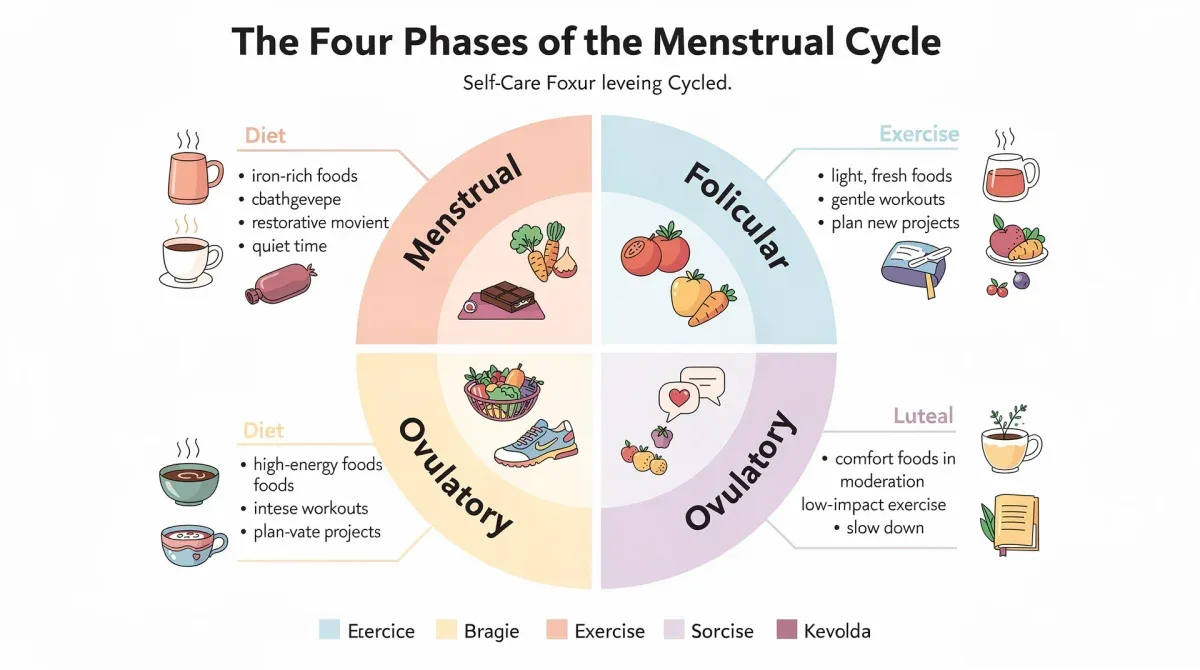
The following four-stage framework provides an illustrative wellness reference, not a precise biological schedule or a medical diagnostic tool.
Unpacking the Menstrual Phase: Rest and Reflection
Menstruation marks the beginning of a new cycle and occurs when the uterine lining is shed through menstrual bleeding.
Estrogen and progesterone levels are generally low around this time, although individual experiences of fatigue and discomfort can differ considerably.
During menstruation, cycle-syncing self-care may involve adjusting daily activities according to actual symptoms rather than automatically limiting physical activity.
Restorative Practices for Menstruation
Gentle stretching, comfortable walking, and sufficient sleep may help individuals manage menstrual discomfort while maintaining a flexible daily routine.
Those experiencing significant fatigue may benefit from additional rest, while individuals feeling comfortable can continue their usual exercise and activities.
Developing a personalized approach to self-care allows individuals to respond appropriately to their symptoms without unnecessary restrictions or pressure.
Supporting Nutrition During Menstruation
Menstrual bleeding contributes to iron loss, making adequate dietary iron particularly important for individuals experiencing regular or heavy periods.
Beans, lentils, lean meats, fortified cereals, and dark leafy vegetables can contribute to meeting daily nutritional requirements.
Persistent fatigue or unusually heavy bleeding may require medical evaluation to determine whether iron deficiency or another condition is present.
The Follicular Phase: Energy and New Beginnings
The follicular phase begins on the first day of menstruation and continues until ovulation, overlapping with the menstrual bleeding stage.
Estrogen levels generally rise as ovarian follicles develop, preparing the reproductive system for the potential release of an egg.
Within cycle-syncing self-care, this stage provides an opportunity to observe personal energy patterns without assuming everyone experiences increased productivity.
Optimizing Energy in the Follicular Phase
Individuals who notice improved energy after menstruation may choose to introduce new activities, exercise routines, or demanding personal projects.
However, there is no biological requirement to schedule creative tasks or professional responsibilities exclusively during the follicular phase.
Personal preferences, sleep quality, stress levels, and existing commitments should remain important considerations when organizing daily activities and exercise.
Supporting Physical Activity and Recovery
Strength training, cardiovascular exercise, walking, and recreational activities can support general health when performed according to individual fitness levels.
Exercise intensity should reflect physical readiness, recovery requirements, and any symptoms that may interfere with comfortable or safe movement.
Cycle-syncing self-care encourages flexible exercise decisions without treating hormonal changes as automatic indicators of physical performance or exercise capacity.
Ovulatory Phase: Understanding Energy and Physical Changes
Ovulation occurs when an ovary releases an egg following hormonal changes involving estrogen and luteinizing hormone during the menstrual cycle.
Although ovulation may occur around day fourteen in a twenty-eight-day cycle, its actual timing differs between individuals and cycles.
Some individuals notice changes in energy, physical sensations, or sexual interest, while others experience few noticeable symptoms during ovulation.
Leveraging Personal Strengths During Ovulation
Individuals who feel energetic during ovulation may choose to participate in demanding workouts, social activities, or important professional responsibilities.
However, cycle-syncing self-care should not assume that ovulation universally improves confidence, communication abilities, physical strength, or emotional resilience.
Scheduling activities according to actual readiness provides a more practical approach than relying on predetermined expectations about hormonal performance.
Maintaining Balanced Nutrition During Ovulation
Balanced meals containing vegetables, fruits, proteins, whole grains, and healthy fats can support nutritional requirements throughout the menstrual cycle.
There is no established requirement for special detoxification diets intended to remove excess hormones specifically during the ovulatory stage.
Maintaining adequate nutrition and hydration remains more important than following restrictive dietary protocols associated with individual menstrual cycle phases.
Luteal Phase: Winding Down and Nurturing
The luteal phase begins after ovulation, when progesterone produced by the corpus luteum supports preparation of the uterine lining.
If pregnancy does not occur, progesterone and estrogen levels eventually decline, contributing to the beginning of the next menstrual period.
During this stage, cycle-syncing self-care may help individuals recognize premenstrual symptoms and adjust their routines according to personal comfort.
Self-Care in the Luteal Phase
Some individuals experience fatigue, breast tenderness, bloating, appetite changes, or emotional symptoms during the days preceding their menstrual period.
Flexible schedules, adequate sleep, regular meals, and manageable activities may provide practical support when these symptoms affect everyday comfort.
Exploring affordable self-care strategies can help individuals maintain supportive routines without relying on expensive products or specialized wellness subscriptions.
Understanding Premenstrual Syndrome
Premenstrual syndrome, commonly known as PMS, describes recurring physical or emotional symptoms that develop before menstruation in some individuals.
Symptoms may affect daily activities, relationships, concentration, or physical comfort, although their intensity and duration vary between individuals.
Cycle-syncing self-care may support symptom awareness, but persistent or disruptive PMS symptoms should be discussed with a qualified healthcare professional.
Dietary Adjustments Throughout the Menstrual Cycle
Nutritional requirements depend on age, physical activity, health conditions, dietary habits, and other factors extending beyond menstrual cycle timing.
Regular balanced meals can support energy and general health without requiring individuals to follow entirely different diets during each phase.
Cycle-syncing self-care encourages attention to hunger, appetite changes, hydration, and nutritional adequacy rather than unnecessary food restrictions or hormonal claims.
Choosing Nutrient-Dense Foods
Vegetables, fruits, legumes, whole grains, lean proteins, and healthy fats provide nutrients that support everyday physical and cognitive functions.
Iron-rich foods are particularly relevant when menstrual blood loss increases nutritional requirements or contributes to an existing iron deficiency.
Combining plant-based iron sources with foods containing vitamin C may improve iron absorption as part of a balanced diet.
Managing Appetite and Food Cravings
Some individuals experience increased appetite or food cravings before menstruation, although these experiences are not identical across all menstrual cycles.
Regular meals containing protein, fiber, and suitable carbohydrates may help maintain satisfaction and support consistent energy throughout the day.
Responding to appetite through balanced food choices can complement cycle-syncing self-care without encouraging restrictive eating or guilt around normal hunger.
Understanding Hydration and Supplements
Maintaining adequate hydration supports normal physiological functions and may contribute to physical comfort during everyday activities and regular exercise.
Dietary supplements should not be considered essential components of cycle-based wellness routines unless individual nutritional circumstances justify their use.
Consult a healthcare professional before taking iron, hormonal supplements, or concentrated herbal products marketed for menstrual cycle regulation.
Exercise and Movement: Aligning With Your Body
Regular physical activity supports cardiovascular health, muscular strength, mobility, and general well-being regardless of an individual's menstrual cycle stage.
Exercise performance may vary between individuals, but research does not establish universally optimal workout intensities for every menstrual cycle phase.
A sustainable cycle-syncing self-care routine therefore prioritizes personal symptoms, physical readiness, recovery, and consistency over predetermined hormonal exercise schedules.
What Research Says About Cycle-Specific Exercise
A systematic review indexed by PubMed examined how different menstrual cycle phases may influence physical exercise performance in naturally menstruating women.
The researchers found generally small effects alongside substantial individual variation and limitations affecting the quality of the available evidence.
These findings support individualized exercise planning rather than universal recommendations requiring different training intensities during specific menstrual cycle stages.
Choosing Exercise According to Your Symptoms
Walking, stretching, swimming, yoga, and moderate strength training may provide comfortable movement options when individuals experience fatigue or menstrual discomfort.
Higher-intensity workouts may remain appropriate during menstruation or the luteal phase when individuals feel comfortable and adequately recovered.
Cycle-syncing self-care should encourage adaptable physical activity rather than suggesting that menstruation automatically makes demanding exercise unsafe or ineffective.
Emotional and Mental Well-Being Across Phases
Hormonal changes may influence emotional experiences, although mood also depends on sleep, relationships, stress, health conditions, and broader personal circumstances.
Recognizing recurring emotional patterns may help individuals prepare supportive routines when certain symptoms appear consistently throughout their menstrual cycles.
Cycle-syncing self-care encourages emotional awareness without assuming that particular hormonal stages determine personality, communication skills, creativity, or professional abilities.
Emotional Support Strategies
Practicing journaling can help individuals document emotions, identify recurring concerns, and reflect on experiences associated with their menstrual cycles.
Gentle relaxation techniques and meditation may provide additional opportunities to manage everyday stress and develop more intentional personal wellness habits.
Establishing healthy boundaries can also help individuals balance personal responsibilities, social expectations, and opportunities for sufficient rest throughout the month.
Recognizing Significant Emotional Symptoms
Some individuals experience substantial mood changes before menstruation that interfere with work, relationships, personal responsibilities, and overall quality of life.
Premenstrual dysphoric disorder, known as PMDD, involves severe recurring symptoms that may require appropriate medical assessment and professional treatment.
Personal wellness routines should complement professional care rather than replace evaluation for persistent depression, severe anxiety, or other disruptive symptoms.
How to Track Your Menstrual Cycle Effectively
Menstrual tracking provides opportunities to identify recurring symptoms, understand cycle duration, and recognize individual patterns across several months.
Tracking can involve recording bleeding dates, sleep quality, physical discomfort, energy levels, appetite changes, and emotional experiences throughout the cycle.
These observations can help personalize cycle-syncing self-care without relying exclusively on predictions generated through standardized twenty-eight-day menstrual calendars.
Using a Personal Cycle Journal
A notebook, calendar, or suitable tracking application can provide a convenient method for documenting menstrual dates and associated symptoms.
Record observations consistently while remembering that stress, illness, travel, and changing daily routines can also influence individual experiences.
Reviewing several cycles may reveal useful patterns, although personal observations cannot independently establish hormone levels or confirm specific medical conditions.
Protecting Personal Health Information
Menstrual tracking applications may collect sensitive information involving reproductive health, personal habits, symptoms, and other details associated with individual users.
Review privacy policies, available data controls, and account permissions before deciding whether to store sensitive information within a particular application.
A private offline journal can provide an alternative for individuals who prefer documenting menstrual experiences without sharing reproductive information online.
Adapting Cycle-Syncing to Irregular Menstrual Cycles
Menstrual cycle duration may change because of hormonal contraception, perimenopause, stress, medical conditions, pregnancy, or other individual physiological circumstances.
These variations can make standardized four-phase calendars unsuitable for identifying an individual's actual reproductive hormone patterns or ovulation timing.
Cycle-syncing self-care can instead emphasize observable symptoms and daily well-being when predictable menstrual cycle stages cannot be reliably identified.
Hormonal Contraception and Cycle-Based Wellness
Some hormonal contraceptives suppress ovulation or modify menstrual bleeding patterns, depending on their formulation and the way they are used.
Individuals using these methods should not assume that conventional four-phase cycle schedules accurately represent their current hormonal patterns.
General wellness habits remain appropriate, but questions about contraception and reproductive symptoms should be addressed with a qualified healthcare professional.
Understanding When Medical Advice Is Necessary
Persistent irregular bleeding, severe pelvic pain, unusually heavy menstruation, or significant changes in cycle duration may require professional medical evaluation.
These symptoms should not automatically be attributed to ordinary hormonal fluctuations or managed exclusively through dietary and lifestyle adjustments.
Cycle-syncing self-care is a general wellness approach and should not replace appropriate diagnosis or treatment of menstrual and reproductive conditions.
The Long-Term Impact of Cycle-Syncing
Consistent attention to menstrual experiences may help individuals develop greater awareness of their physical needs, recurring symptoms, and personal wellness preferences.
Flexible routines can encourage realistic expectations around energy, productivity, exercise, nutrition, and opportunities for rest throughout everyday life.
However, cycle-syncing self-care has not been established as a comprehensive medical treatment for hormonal disorders or persistent menstrual symptoms.
Potential Benefits of Consistent Self-Care

Tracking symptoms and maintaining supportive habits may help individuals identify situations where additional rest, nutritional support, or schedule adjustments become useful.
Improved awareness can also support more detailed conversations with healthcare professionals when menstrual symptoms require additional assessment or treatment.
Individual outcomes vary, and there is no scientifically established number of menstrual cycles required to experience benefits from this approach.
Building a Sustainable Monthly Wellness Routine
Begin with manageable habits involving consistent sleep, balanced meals, regular movement, emotional awareness, and flexibility when physical discomfort occurs.
Adjust these habits according to personal experiences instead of attempting to follow every recommendation associated with a particular menstrual stage.
The most practical cycle-syncing self-care routines accommodate changing circumstances while supporting general health without creating unnecessary pressure or unrealistic expectations.
Key Point | Brief Description |
|---|---|
Menstrual Phase | Focus on rest, reflection, and nutrient replenishment. |
Follicular Phase | Explore new activities according to individual energy levels and physical readiness. |
Ovulatory Phase | Maintain flexible activity schedules based on personal comfort rather than assumed peak performance. |
Luteal Phase | Prioritize nurturing, winding down, and completing tasks. |
Frequently Asked Questions About Cycle-Syncing Self-Care
What exactly is cycle-syncing self-care?
Cycle-syncing self-care is a wellness approach that encourages individuals to track menstrual experiences and adapt daily activities, nutrition, exercise, and rest according to their personal symptoms and preferences.
How does cycle-syncing impact energy levels?
Tracking menstrual symptoms may help individuals recognize recurring changes in perceived energy and adjust daily responsibilities accordingly. However, cycle-syncing does not guarantee improved energy regulation or prevent fatigue.
Is cycle-syncing only for women with regular cycles?
No. Individuals with irregular cycles can focus on observable symptoms, sleep quality, appetite, and physical comfort. Standardized menstrual calendars may be less appropriate when cycle duration or ovulation timing varies.
What are the main potential benefits of this strategy?
Potential benefits include greater symptom awareness, more flexible wellness habits, improved understanding of personal needs, and better preparation for recurring menstrual discomfort. Individual results vary.
How long does it take to see results from cycle-syncing?
There is no scientifically established timeframe for obtaining results. Tracking experiences across several cycles may help identify recurring patterns, but measurable improvements are not guaranteed.
Does every menstrual cycle last 28 days?
No. Normal adult menstrual cycles generally range between twenty-four and thirty-eight days. Cycle duration and ovulation timing can also vary between months.
Can I perform intense exercise during menstruation?
Yes, if you feel comfortable and have no medical restrictions. Exercise intensity should depend on physical readiness, symptoms, fitness level, and recovery rather than menstrual timing alone.
Does cycle-syncing balance reproductive hormones?
There is insufficient evidence to establish that cycle-syncing independently regulates reproductive hormone levels or treats hormonal disorders. Persistent menstrual concerns require appropriate professional evaluation.
Are special detox diets necessary during ovulation?
No. There is no established need for phase-specific detox diets. Maintaining balanced nutrition and adequate hydration provides a more appropriate foundation for general health.
Can cycle-syncing help manage PMS?
Tracking symptoms and maintaining supportive lifestyle habits may help individuals manage certain premenstrual experiences. However, severe or persistent symptoms may require professional assessment and evidence-based treatment.
Can I practice cycle-syncing while using hormonal contraception?
General self-care habits remain appropriate, but hormonal contraceptives can alter ovulation and bleeding patterns. Conventional four-phase schedules may therefore not accurately reflect an individual's hormonal status.
Can cycle-syncing be used as birth control?
No. A general cycle-syncing wellness routine is not a reliable contraceptive method. Individuals seeking pregnancy prevention should consult a healthcare professional about appropriate contraceptive options.
When should menstrual symptoms be discussed with a doctor?
Seek medical advice when menstrual symptoms interfere with daily life, bleeding becomes unusually heavy, pelvic pain is severe, or significant changes in cycle patterns occur.
Conclusion
Cycle-syncing self-care provides a flexible framework for understanding menstrual experiences while developing supportive nutrition, exercise, rest, and emotional wellness habits.
Individual symptoms and physical readiness should guide daily decisions rather than rigid assumptions about energy levels during particular hormonal stages.
By combining personal awareness with evidence-based health information, individuals can develop sustainable wellness routines while recognizing when professional medical support is necessary.