The 2026 Shift: New Policies & Mental Health Support
Advertisements
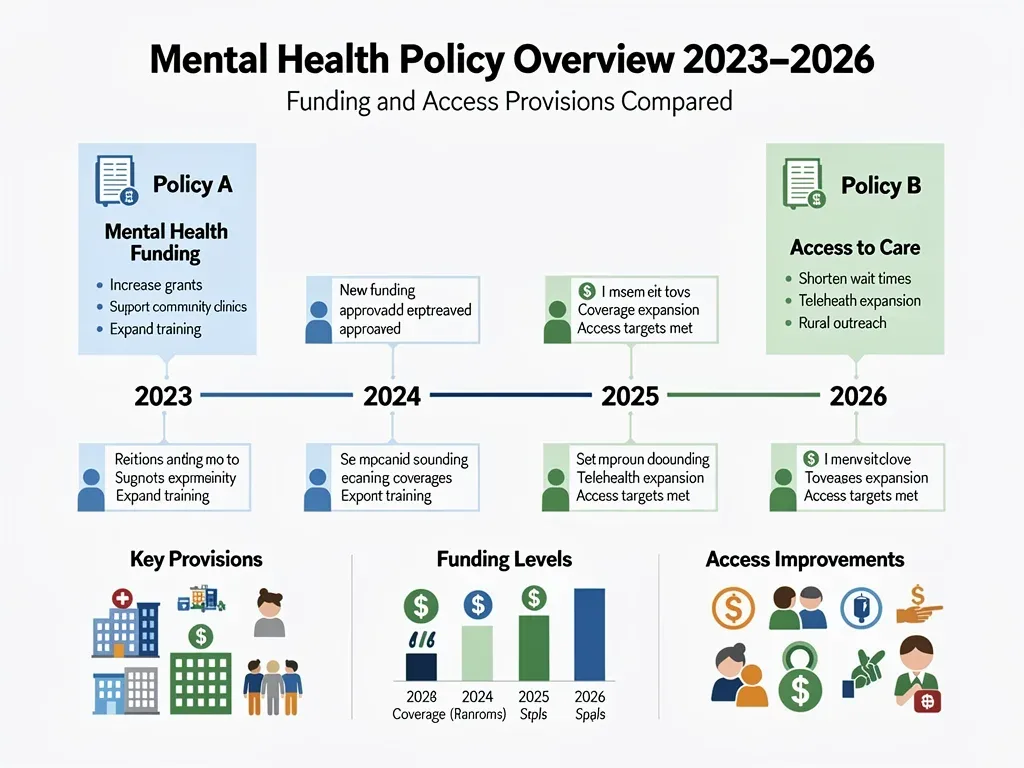
Mental health support in the United States is presented in the source as entering a major transition in 2026 through two policies focused on insurance coverage and healthcare infrastructure.
The changes are described as affecting how services are funded, delivered, and accessed, with potential implications for patients, providers, and healthcare systems.
The source frames these policies as a combined effort to reduce financial barriers, expand the workforce, strengthen telehealth, and improve access to care.
Understanding the Legislative Foundation of the 2026 Shift
The source presents the 2026 shift as being driven by two major policies designed to address persistent gaps in American mental healthcare.
Policy A focuses on insurance coverage and parity, while Policy B concentrates on workforce development and integrated care capacity.
Together, they are described as an effort to make mental health support a more consistent part of overall healthcare.
Policy A: Expanding Mental Health Coverage Mandates
Policy A is identified in the source as the Mental Health Parity and Addiction Equity Act Enhancement, or MHPAEA-E.
It is described as strengthening parity requirements so that mental health benefits cannot be subjected to stricter financial or treatment limits than physical health services.
The source also connects the policy with broader coverage for preventive care, outpatient therapy, inpatient treatment, and emergency mental health services.
Expanded coverage for telehealth mental health services.
Mandatory coverage for annual mental health wellness checks.
Prohibition of prior authorization for emergency mental health care.
Policy B: Investing in Mental Healthcare Infrastructure and Workforce
Policy B is presented as the National Mental Health Workforce and Integrated Care Initiative, or NMHWI-CI.
Its focus is described as expanding the supply of psychiatrists, psychologists, social workers, counselors, and other mental health professionals.
The policy also supports integrated care models and new resources for underserved communities where access to mental health support may be limited.
Addressing Workforce Shortages and Geographic Disparities
The source describes workforce shortages as one of the central problems Policy B is intended to address.
New training programs, scholarships, residency positions, and incentives for professionals serving underserved areas are presented as key tools.
The source also mentions a national provider registry intended to simplify referrals and make it easier for patients to locate appropriate care.
Funding for 5,000 new mental health residency slots by 2026.
Grants for 1,000 new rural mental health clinics.
Loan forgiveness for mental health professionals serving underserved communities.
Projected Impact on American Citizens and Healthcare Providers
The combined policies are described as potentially improving access to services while reducing some costs faced by patients.
Healthcare providers may receive additional resources but also need to adjust billing, administration, and interdisciplinary care processes.
The source frames this broader shift as moving mental wellness toward a more preventive and integrated healthcare model.
Enhanced Access and Affordability for Patients
The source suggests that stricter parity rules could make therapy, medication management, and other treatments easier to access through insurance.
Reduced financial barriers may allow some patients to seek help earlier instead of delaying treatment until symptoms become more severe.
Preventive services and annual wellness checks are also presented as ways to encourage more proactive engagement with mental healthcare.
Challenges and Opportunities for the Mental Health Sector
The source acknowledges that the transition could create operational challenges for mental health providers and healthcare organizations.
New billing practices, regulations, and integrated care models may require updated systems, training, and closer collaboration between specialties.
At the same time, additional funding and resources are presented as opportunities to expand clinics, research, innovation, and overall mental health support.
Navigating New Regulatory Frameworks and Collaboration
Providers may need to become familiar with new billing procedures, parity requirements, and rules connected to integrated care.
The policies also encourage closer coordination between mental health specialists and primary care professionals.
Training and clear communication are presented as important for helping providers adjust while maintaining continuity of care.
Technological Advancements and Telehealth Expansion
Telehealth is presented as an important part of the 2026 transition because it can reduce geographical and logistical barriers to care.
The source states that digital platforms could receive additional support, allowing providers to serve rural patients and people who prefer virtual appointments.
Digital assessment, therapy, and monitoring tools are also described as components of a more responsive system of mental health support.
The Role of Digital Platforms in Mental Health Delivery
Digital tools are expected to support remote appointments, therapy modules, wellness resources, and ongoing patient monitoring.
These options can reduce difficulties related to transportation, scheduling, mobility, and geographic distance.
The source presents digital care as a complement to traditional services rather than simply a convenience feature.
Increased reimbursement rates for telehealth mental health sessions.
Development of secure, interoperable digital health records for mental health.
Funding for AI-driven mental health support tools and platforms.
Anticipated Economic and Social Implications
The source connects improved mental healthcare with potential economic effects such as higher productivity and lower absenteeism.
It also suggests that stronger access to treatment could influence broader social issues connected with untreated mental health conditions.
These policies are therefore framed as investments not only in individual care but also in the wider social and economic environment.
Economic Benefits of a Mentally Healthier Workforce
The source argues that untreated mental health conditions can contribute to lost productivity and higher healthcare costs.
Improved access to treatment is described as potentially supporting stronger job performance, lower absenteeism, and reduced employee turnover.
Lower use of emergency services and reduced long-term disability are also presented as possible economic benefits.
Preparing for the 2026 Shift: Recommendations for Stakeholders
Individuals are encouraged in the source to review insurance benefits and understand what new forms of mental health support may become available.
Providers are advised to update administrative processes, participate in training, and explore new opportunities for collaboration.
Policymakers are presented as responsible for monitoring implementation and adjusting the policies when outcomes indicate changes are needed.

Actions for Individuals and Families
Individuals and families can begin by reviewing insurance plans to identify changes related to mental health benefits and telehealth coverage.
The source also encourages discussing mental health concerns with primary care physicians as integrated care models expand.
Community programs, local resources, and support groups can complement formal healthcare services and broaden the available support network.
The Future Landscape of Mental Health Support in America
The source presents the 2026 changes as a significant step toward a more accessible and integrated mental healthcare system.
The policies are described as supporting greater parity between physical and mental healthcare while expanding the capacity of providers and digital services.
Long-term success will depend on continued implementation, evaluation, funding, and adaptation across the healthcare system.
Key Policy | Primary Impact |
|---|---|
Policy A (MHPAEA-E) | Strengthens mental health insurance parity, expanding coverage and reducing out-of-pocket costs for Americans seeking mental health support. |
Policy B (NMHWI-CI) | Invests in mental health workforce development and integrated care infrastructure, addressing shortages and improving service delivery. |
Combined Effect | Aims for more accessible, affordable, and high-quality mental health support, fostering a healthier and more productive American populace. |
Future Outlook | Expected to reduce mental health disparities, destigmatize mental illness, and promote proactive mental wellness nationwide. |
Frequently Asked Questions About the 2026 Mental Health Policies
What exactly is the 2026 Shift in mental health policies?▼
The source describes it as the implementation of two policies focused on expanding insurance coverage and strengthening the mental healthcare workforce and infrastructure.
How will these new policies affect my insurance coverage for mental health?▼
Policy A is described as strengthening parity requirements and expanding insurance coverage for mental health support.
Will there be more mental health professionals available by 2026?▼
The source states that Policy B funds training, residency programs, clinics, and incentives intended to expand the mental health workforce.
How will telehealth services be impacted by the 2026 policies?▼
The policies are presented as supporting greater use of telehealth and remote mental health support.
What should I do to prepare for these changes?▼
The source recommends reviewing insurance benefits, discussing needs with healthcare providers, and staying informed about local mental health resources.
Impact and Implications
The source presents the 2026 shift as a substantial change in how mental health support could be funded and delivered in the United States.
Expanded insurance coverage and workforce investment are described as complementary strategies intended to improve both affordability and actual availability of services.
The long-term impact will depend on implementation, provider adaptation, continued funding, and whether the intended changes translate into practical improvements for patients.